

1. Starting and Ending in the City Heart
One of the most obvious advantages of choosing rail travel is that both the starting and ending points are close to the city center. Many major train stations are located in city centers or convenient hubs. After arrival, you can often reach your hotel or attractions in just a few steps or one or two subway stops, without having to arrange an hour-long airport bus or long-distance taxi ride.
In stark contrast, most airports are located in the suburbs. Even with fast flights, passengers still spend a significant amount of time queuing for security checks, checking in luggage, and traveling to and from the airport. For short or medium-haul journeys, the short “high-speed” flight often cannot match the overall efficiency of the “door-to-door” rail service.
2. Time Isn’t Just Determined by the Clock on Your Watch
On the surface, trains may seem slower than airplanes, but if you consider the entire journey from your doorstep to your hotel reception on the same timeline, trains often quietly catch up or even surpass them. Traveling by train typically doesn’t require arriving at the station hours in advance. Check-in, security checks, and boarding processes are relatively simplified, allowing for a more “on-time” departure rhythm.
Furthermore, since train stations are often located in key city centers, connections after arrival are smoother, eliminating the need to anxiously refresh navigation in traffic jams. Rather than simply “saving time,” it’s about transforming fragmented and unpredictable waiting time back into manageable travel time.
3. Budget-Friendly: One Ticket Could Save You Two Nights’ Room Rates
On many routes, train fares are relatively more “moderate” than airfares, especially during peak seasons or close to departure dates. Airfares can easily double, while train fares tend to be more stable and logically consistent. For budget-conscious travelers, trains offer an option that allows for cost control without sacrificing too much comfort.
Overnight trains are an underrated gem: a sleeper ticket serves the dual purpose of “transportation + accommodation.” You sleep in the carriage, and in the morning, opening the window reveals another city. This is not just about saving money; it’s about dedicating your limited vacation time to the streets, museums, and cafes, rather than to transportation and transfers.
4. A Journey Without Turbulence Makes It Easier to Relax
For many, turbulence during flights is not just discomfort, but a real source of psychological stress. In contrast, trains glide smoothly on tracks, from start to finish, mostly at a gentle and predictable pace. You don’t have to wonder “Am I encountering turbulence again?” with every jolt.
The predictability of rail travel is also reflected in the journey experience: you can comfortably read, work, nap, or chat in the carriage without being constantly interrupted by seatbelt signs and announcements. When transportation ceases to be a source of anxiety and becomes a space for genuine relaxation, the meaning of travel itself subtly changes.
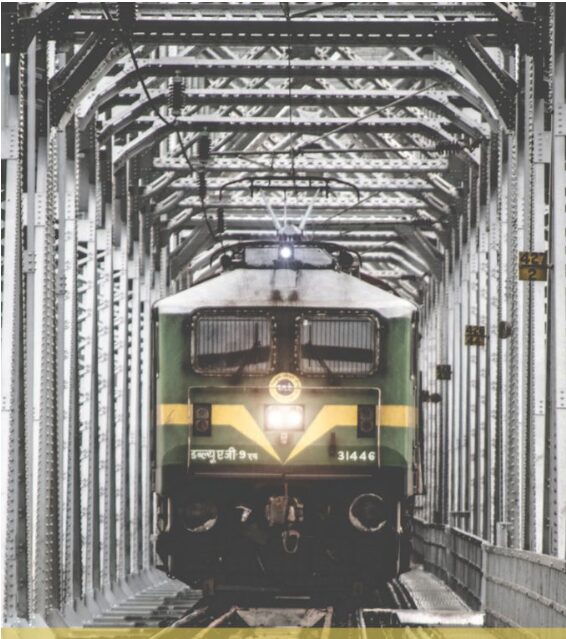
5. The Scenery Outside the Window: No Longer Just “Passing Clouds” or “Attention Stolen by Road Conditions”
While road trips offer the freedom of “spontaneous travel,” drivers inevitably focus most of their attention on road conditions, road signs, and navigation, making it difficult to truly appreciate the rivers, valleys, and towns they pass. Trains completely remove this pressure: you can let the scenery flash by the window, or move between carriages to find the best vantage point.
Compared to the white clouds and city lights high in the sky, the railway scenery close to the ground often has a greater sense of depth: farmland, valleys, factories, ancient towns… everything approaches and recedes at a more perceptible pace. Those railway lines that are just a line on a map slowly transform into a true geographical and cultural panorama outside the window.
6. Spaciousness: Making the Journey More Than Just “Being Confined to a Seat”
Whether compared to economy class seats or the cramped back of a private car, train carriages often offer more spaciousness: greater seat pitch and wider aisles allow for easy leg movement. For long-distance travel, this freedom is not only about comfort but also about health—prolonged sitting is not a trivial matter for many.
More importantly, trains don’t offer “hours confined to a seat,” but rather a journey that can be freely divided: you can switch between seats, dining cars, and connecting areas, or get off at each station for a short stop, exploring the city like turning a page. This fluid sense of space makes the time “on the road” itself something to look forward to.
7. Making Transportation an Part of the Journey
Airplanes and cars are often seen as “tools to get from point A to point B,” with the real journey seemingly unfolding only at the destination. Rail travel is often the opposite: you might choose a slower, more grounded mode of transportation precisely because of the route, the train, and the stops along the way.
On the train, you’ll encounter all sorts of fellow travelers: students with backpacks, families with suitcases, tourists with maps, and an occasional conversation might add an unexpected twist to your journey. Some routes are “destinations” in themselves—night trains, scenic mountain lines, coastal railways… People come not just to reach their destination, but simply to ride the train.
8. When is Rail the Smarter Choice?
If your travel is primarily between cities with a well-established rail network, prioritizing trains often strikes a good balance between time, cost, and comfort. For those who habitually read, write, or work on the go, the train carriage can even become a temporary and quiet “mobile study.”
Of course, rail isn’t optimal for all routes: for extremely long intercontinental journeys or in areas with insufficient rail coverage, airplanes or cars still have their irreplaceable advantages. But given the choice, taking a look at the train timetable might allow you to secure a unique journey—not by “squeezing in time to travel,” but by “reclaiming time during the journey.”