

1. The Transportation Dilemma Under Climate Goals
Globally, about 90% of transportation energy still comes from fossil fuels such as gasoline and diesel, making transportation a major destination for global oil demand and a key source of greenhouse gas emissions. To achieve global climate goals, emissions reduction in the transportation sector is no longer an “option,” but an unavoidable “must-answer question.”
On this test, trains and cars play drastically different roles: the former is seen as the “low-carbon backbone of public transportation,” while the latter is often considered a “major emitter.” However, this impression is becoming less absolute in today’s rapidly evolving technological landscape.
2. Behind the Numbers: Who are the Real Major Emitters?
In terms of total emissions, road transportation accounts for about 70% of global transportation-related carbon emissions, while rail accounts for only about 10%, a comparison that is almost immediately apparent. However, total emissions are only a macroscopic reflection. To determine the “carbon price” of a journey, we must look at the details—the emissions behind “every passenger, every kilometer.”
On a unit of “passenger kilometer,” factors such as gasoline-powered cars, the number of passengers, whether electric vehicles are used, and the source of electricity can make the carbon footprint of the same route vastly different. Trains are not a monolithic entity either: high-speed rail, electrified intercity trains, lines still using diesel locomotives, and differences in occupancy rates between first class and economy class all alter the final figures.
3. Every Kilometer: The Carbon Account of Trains and Cars
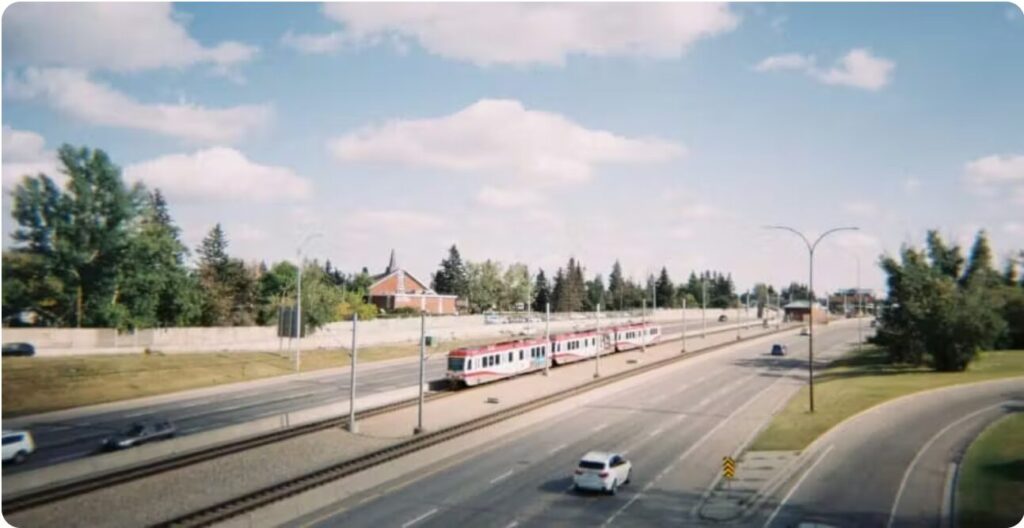
Some efficient rail services, using renewable electricity, can achieve emissions as low as approximately 6 grams of CO2 equivalent per kilometer per person, while traditional diesel-powered national railway services hover around 40 grams per kilometer per person. If we shift our focus to high-speed trains or electrified intercity trains, high occupancy rates can further reduce per capita emissions, making “fully loaded trains” truly low-carbon transportation.
Gasoline-powered cars, in most cases, cannot match this, especially in situations where “one person is driving,” where per capita emissions are dramatically amplified by the “lonely seat.” However, when the story shifts to a mid-sized electric vehicle operating under average European grid conditions, and with emissions shared by three to four passengers, emissions per person per kilometer can drop to just over ten grams, comparable to many train services, and even slightly superior in certain scenarios.
4. The Technological Race: Electric Vehicles Accelerate, Trains Move Steadily Forward
The automotive industry has been undergoing a near-mad dash towards electrification in recent years. Many countries have announced plans to gradually cease sales of new gasoline-powered vehicles over the next decade or so, fully transitioning to zero-emission models. Battery technology, drive systems, and vehicle design have iterated several times in a short period, and the energy efficiency and range of new electric vehicles continue to improve, making “driving” no longer inherently synonymous with high emissions.
The progress of railways is much slower. The lifespan of a train set is often around thirty to forty years, and the update cycles for tracks, signaling, and power systems are also lengthy. This means that technological upgrades and the release of emission reduction potential are more inclined towards “long-termism.” But it is precisely because of this long lifespan that once the railway network is electrified and connected to clean energy, it can stably provide low-carbon transport capacity for a long time.
5. Manufacturing and Infrastructure: The Other Side of Hidden Emissions
Whether it’s the wheels or the carriage, the creation of every mode of transportation is itself a high-energy-consuming industrial project: raw material mining, component production, vehicle assembly, and transportation all release significant amounts of greenhouse gases during the production process. Battery production for electric vehicles is particularly “carbon-heavy,” which is why an electric vehicle’s “starting line emissions” are often higher than those of a comparable gasoline-powered vehicle when it first leaves the factory.
However, the mileage traveled gradually offsets this gap. Taking a typical mid-sized electric vehicle as an example, after traveling approximately 20,000 kilometers in most regions, its total lifecycle carbon footprint catches up with and surpasses that of a gasoline-powered vehicle; every additional kilometer traveled thereafter widens the lead. Meanwhile, the “hidden emissions” on the railway side come more from the massive infrastructure projects such as rail laying, roadbed construction, bridges, and tunnels, as well as decades of operation and maintenance. These emissions, distributed across every passenger and every kilometer, also need to be considered.
6. Electricity Structure: Same Vehicle, Different Countries, Different Answers
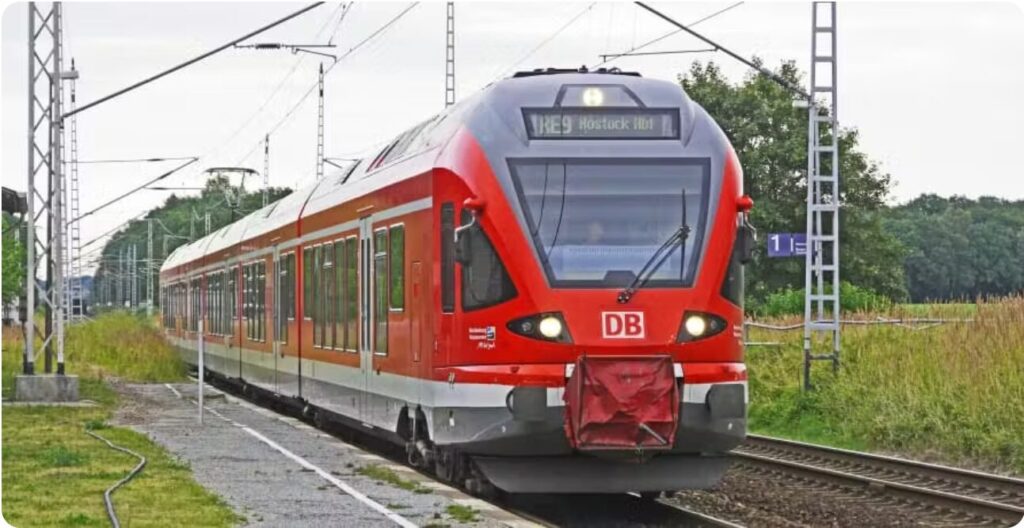
No exhaust fumes does not equal no emissions; the key lies in the source of that electricity. In electricity systems heavily reliant on coal or natural gas, electric vehicles and electrified trains still carry a heavy “electricity backpack.” However, in countries primarily powered by nuclear, hydro, or wind and solar power, the same vehicle can have a “lighter” carbon footprint per capita per kilometer.
This not only affects daily operational emissions but also the “embedded carbon emissions” in the manufacturing process: electric vehicles or trains produced in low-carbon electricity systems have a smaller “manufacturing shadow” from the outset. This also explains why, in some countries with a high proportion of clean electricity, the actual carbon performance of the same electric vehicle or train is far better than its performance under a high-carbon grid.
7. Travel Choices: A Low-Carbon Checklist for Individuals and Businesses
For individuals, no single mode of transportation can earn the “absolutely correct” low-carbon badge in all situations. The truly smart approach is to make situational choices for each trip.
- For solo or two-person long-distance travel: Prioritize electrified or high-speed rail, especially in areas with a high proportion of clean electricity.
- For group travel where rail is inconvenient: Choose electric vehicles and maximize occupancy to spread vehicle emissions.
- For short-distance city travel: Combine walking, cycling, and public transportation to reduce “lazy driving.”
For businesses and organizations, more systematic emissions reduction requires a comprehensive review of travel and logistics: establish travel policies to guide employees to prioritize rail for medium- and long-distance travel; when cars are unavoidable, promote fleet electrification and choose cleaner electricity and suppliers.
8. Epilogue: A Road, and a Timeline
On climate issues, trains are like a long line laid on the ground, slowly but steadily extending; cars are like a pen racing on a technological track, constantly rewriting their own footnotes. In the future, who will be “greener” will no longer be just a contest of the front of the car or its logo, but will depend on the entire energy system, urban planning, and the invisible numbers behind every travel decision. When we choose to sit in a car or pick up the steering wheel, we are also choosing which future transportation landscape to support—and this choice will ultimately come down to the air, climate, and temperature of the city.